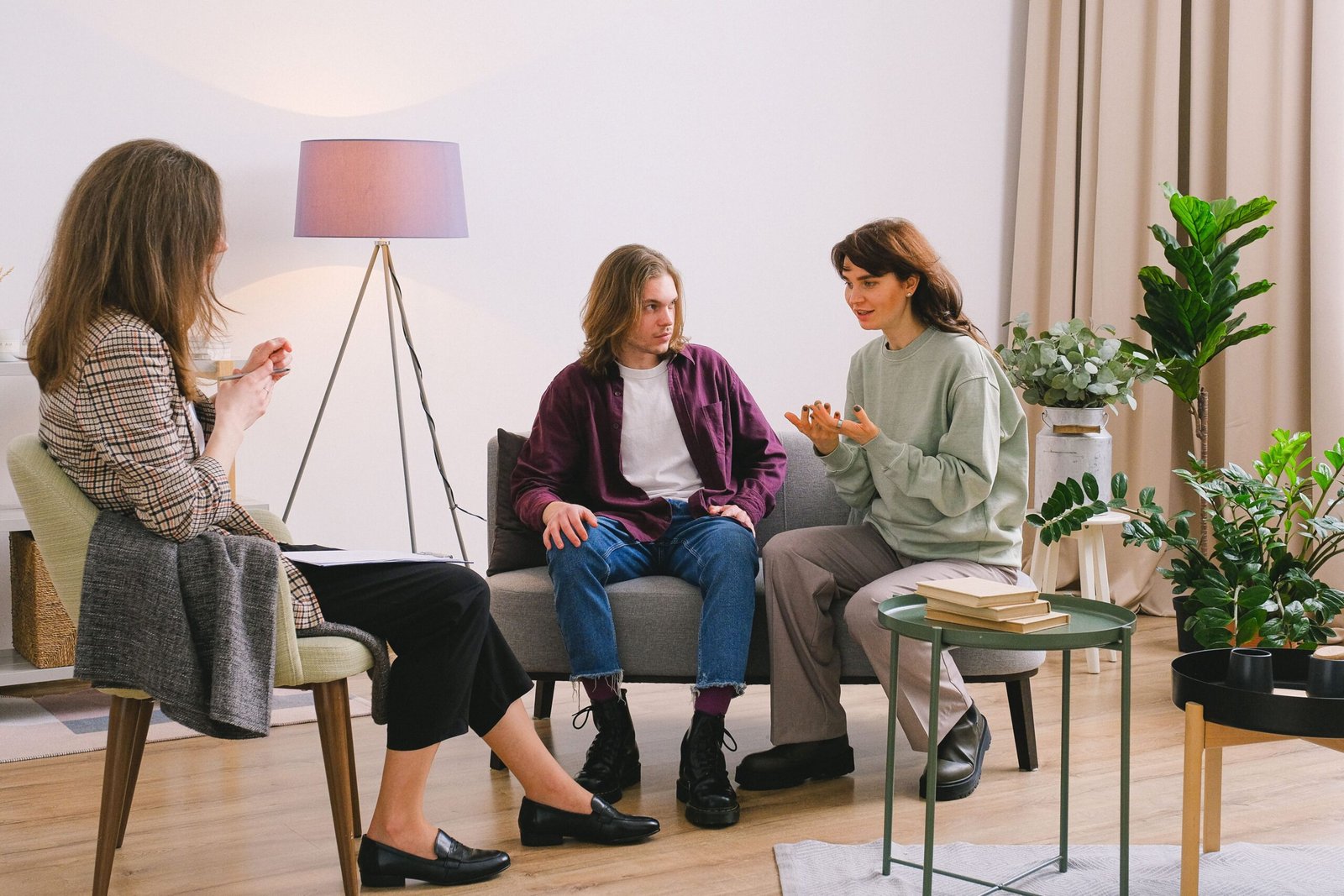

When a relationship has become strained, it can be difficult to know what to do next. You may be having the same argument repeatedly, feeling more like roommates than partners, or trying to find your way forward after betrayal, grief, or a major life change.
Some couples wait because counselling feels like an admission that the relationship is failing. Others wait because one partner is uncertain, reluctant, or worried about being blamed.
Couples counselling is not a judgement about your relationship. It is a structured space to understand what is happening between you, identify what each partner needs, and consider the next steps with more clarity. Some therapists at Wellness in Therapy also have personal experience working in correctional facilities, which can add helpful perspective when shift work, institutional stress, or correctional employment is part of a couple’s story.
What is couples counselling?
Couples counselling, also called relationship counselling or marriage counselling, is a form of psychotherapy focused on the relationship between two partners.
The relationship itself becomes the client. Rather than working with only one person’s symptoms or concerns, the therapist helps both partners look at the patterns, experiences, and needs shaping the relationship.
Couples counselling is:
- A guided space for both partners to speak and be heard.
- An opportunity to understand recurring patterns.
- A place to work on trust, connection, communication, and shared decisions.
- A collaborative process where goals are agreed together.
- Support for couples who want to repair the relationship, understand it more clearly, or decide how to move forward.
It is not:
- Mediation.
- Arbitration.
- A referee deciding who is right.
- A process designed to assign blame.
- Only a last resort before separation.
- A substitute for legal advice about separation or divorce.
A couples therapist does not make the decision about whether you should stay together. The role is to help you have more honest, respectful, and informed conversations about your relationship and your future.
How couples counselling differs from individual therapy
Individual therapy focuses primarily on one person’s experiences, goals, and wellbeing. Couples counselling focuses on the relationship and the interaction between partners.
This does not mean that individual concerns are ignored. Anxiety, depression, trauma, grief, substance use, burnout, and other personal experiences can affect a relationship in important ways. A couples therapist may help you understand how these concerns are influencing the relationship while also recommending individual support when appropriate.
In couples counselling, the therapist pays attention to questions such as:
- What happens between you when conflict begins?
- How does each partner respond when feeling hurt or misunderstood?
- Which concerns keep returning without resolution?
- What helps each of you feel safe, respected, and connected?
- What shared changes would support the relationship?
The goal is not to treat one partner as the problem. It is to understand the cycle that both partners are caught in and consider how that cycle can change.
What brings couples to counselling?
Couples seek support for many different reasons. You do not need to be in constant conflict for counselling to be useful.
Common concerns include:
- Communication breakdown and frequent misunderstandings.
- Recurring arguments about the same topics.
- Emotional distance or feeling like roommates.
- Changes in intimacy, affection, or connection.
- Rebuilding trust after an affair, betrayal, or secrecy.
- Parenting disagreements.
- Blended family strain and differing roles or expectations.
- Conflict about money, household tasks, or division of labour.
- Grief and loss.
- Anxiety, depression, trauma, or substance use affecting the relationship.
- A new baby, move, job loss, retirement, illness, or other major transition.
- Cultural, religious, or faith differences.
- Stress connected to shift work, first responder roles, or correctional employment.
- Questions about whether to remain together or separate.
Some couples arrive with a specific concern. Others know only that the relationship no longer feels the way it once did. Both are valid reasons to ask for support.

What happens in a first session?
The first session usually includes an initial assessment. This helps the therapist understand your relationship history, current concerns, individual circumstances, and hopes for counselling.
Both partners receive space to speak. You may discuss:
- What led you to seek counselling now.
- How long the current concerns have been present.
- Previous attempts to resolve the problem.
- Important relationship and family history.
- Mental health, trauma, grief, or substance use concerns.
- Current stressors and sources of support.
- What you would like to be different.
The therapist also explains how sessions work, including confidentiality and its limits, communication expectations, and the practical structure of counselling.
In some situations, a therapist may recommend brief individual conversations with each partner as part of the assessment. This can help clarify sensitive concerns and support a safe, appropriate treatment plan.
How the first few sessions usually work
After the initial assessment, you and the therapist agree on goals together. These goals may include reducing escalation, rebuilding trust, improving emotional connection, making parenting decisions, or understanding whether the relationship can continue in its current form.
The therapist may help you:
- Identify the cycle that keeps repeating.
- Notice patterns of pursuing, withdrawing, criticizing, or becoming defensive.
- Slow conversations down before they escalate.
- Express needs more clearly.
- Listen without immediately preparing a response.
- Discuss difficult subjects with greater structure.
- Practise repair after hurt or conflict.
- Build agreements that fit your actual circumstances.
The work is not limited to learning communication techniques. It may also involve grief, attachment, identity, trauma, family history, cultural expectations, or the impact of individual mental health concerns.
Does the therapist take sides?
A couples therapist does not take sides. This does not mean that every action has the same impact or that difficult experiences are minimized.
In practice, fairness means giving both partners room to speak while helping each person take responsibility for their own choices and responses. If one partner feels unheard, the therapist may slow the conversation down, reflect what has been said, and make sure the concern is addressed rather than allowing the discussion to move past it.
The therapist is not trying to create a perfect balance in every moment. The aim is to support honesty, accountability, safety, and a clearer understanding of what each partner is experiencing.
What if one partner is reluctant?
Both partners do not always need to be equally ready to begin. One person may be hopeful while the other is cautious, unsure, or concerned that counselling will become a place where they are criticized.
A low-pressure conversation can help. You might say:
- “I know things have been difficult, and I would like us to understand what is happening.”
- “I am not asking you to promise anything. I would like us to speak with someone together.”
- “Could we try an initial consultation and decide what we think afterwards?”
- “I want support for the relationship, not a person to take my side.”
If your partner is not ready to attend, individual counselling can still help you understand your own responses and consider how to approach the relationship. It does not force your partner into counselling, but it can give you a supported place to reflect.

When couples counselling may not be the right fit
Couples counselling may need to be arranged differently when there is fear, coercion, intimidation, or ongoing violence in the relationship.
In these circumstances, speaking openly together may not feel safe. Individual support and safety planning may need to come first. A therapist may recommend separate sessions, individual counselling, specialized services, or another arrangement that better protects each person’s wellbeing.
This is not about blaming either partner. It is about recognizing that relationship work must be appropriate to the circumstances. If you are unsure whether couples counselling is suitable, you can discuss your concerns during an initial consultation.
How often do couples attend?
Wellness in Therapy provides online counselling throughout Ontario by secure video or phone. Sessions are 50 minutes long.
Many couples begin with weekly or biweekly sessions. The right frequency depends on the concerns, availability, level of conflict, and goals you agree on with your therapist.
Couples counselling is usually measured in months rather than weeks. Some couples benefit from focused short-term work. Others need more time, particularly when there has been a long period of disconnection, a significant betrayal, trauma, or several overlapping stressors.
Progress may include fewer escalations, more honest conversations, improved repair after conflict, clearer boundaries, or a better understanding of what each partner wants. Setbacks are normal. Consistency, honesty, practising between sessions, and both partners taking responsibility tend to support the process.

Counselling is not always about staying together
Couples counselling can support repair and reconnection. It can also help partners decide, with clarity and dignity, whether separation is the right direction.
This does not mean separation is assumed or encouraged. It means counselling can provide a respectful structure for an honest decision when the future of the relationship is uncertain.
If a couple decides to separate, counselling may also help them communicate more respectfully, make practical parenting plans, and reduce unnecessary conflict as they adjust to a different relationship. Legal questions about separation, parenting arrangements, or divorce should be discussed with a qualified legal professional.
How to bring up counselling with your partner
Choose a calm time rather than raising the subject in the middle of an argument. Speak from your own experience instead of presenting a list of your partner’s faults.
You might begin with:
- “I have been worried about how disconnected we feel.”
- “I would like help understanding our pattern.”
- “I want us to have a fair chance to talk with support.”
- “We do not need to decide everything today. We could start with a consultation.”
Try to avoid presenting counselling as a threat, punishment, or final warning. A gentle invitation is more likely to lower defensiveness and make room for curiosity.
When should you seek help?
Earlier support can be useful when the same conflict keeps returning, emotional distance is growing, trust has been damaged, or you are avoiding important conversations because they escalate quickly.
You do not need to wait until the relationship feels beyond repair. You also do not need to arrive with a complete explanation or a shared conclusion. A free 15-minute initial consultation can help you ask questions, describe what is happening, and consider whether online counselling in Ontario is an appropriate next step.
Wellness in Therapy offers virtual counselling and psychotherapy services for couples throughout Ontario by secure video or phone. You can learn more about our counselling services, team, and other mental health resources before reaching out.
Support does not require you to decide the entire future of your relationship today. It can begin with a conversation about what both of you need and what you would like to understand more clearly.
Talk with a therapist
Wellness in Therapy offers online sessions across Ontario by secure video or phone, with in-person appointments at our Burlington office for couples in Burlington, Oakville, Hamilton, Milton and Mississauga.
You can read more about our couples counselling service. If you would like to talk about your situation, you can book a free 15-minute consultation or call (647) 327-6017.
For practical communication tips you can try at home, read 7 Communication Mistakes Couples Make (and How to Fix Them).
Therapists you can reach out to

Safety disclaimer
This article provides general information only. It is not a diagnosis, an assessment, or a substitute for individual care. If you are in immediate danger or experiencing an emergency, call 911 or go to your nearest emergency department. If you are in crisis or having thoughts of suicide, call or text 9-8-8, available 24/7 across Canada. Booking requests and messages to our office are not emergency services. You do not need to manage an emergency on your own.